My research develops machine learning methods for scientific computing, with emphasis on algorithms that learn continually, quantify uncertainty, and scale to distributed systems.
Research Areas
Continual Learning
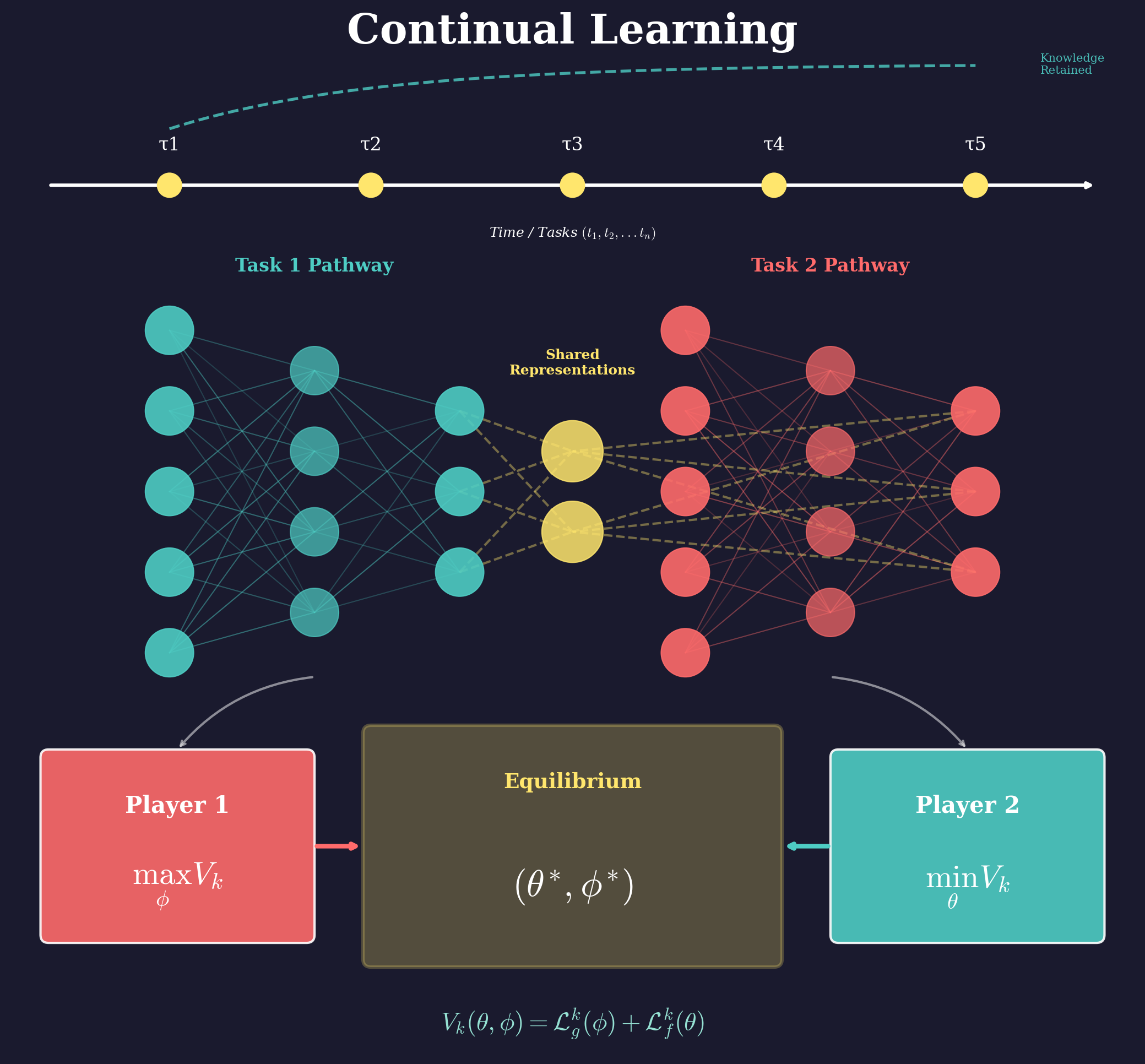
Continual learning addresses the fundamental challenge of training machine learning models on sequential, non-stationary data streams while preserving knowledge from previous tasks. My research in this area focuses on:
7 publications
Workflow Management & Anomaly Detection
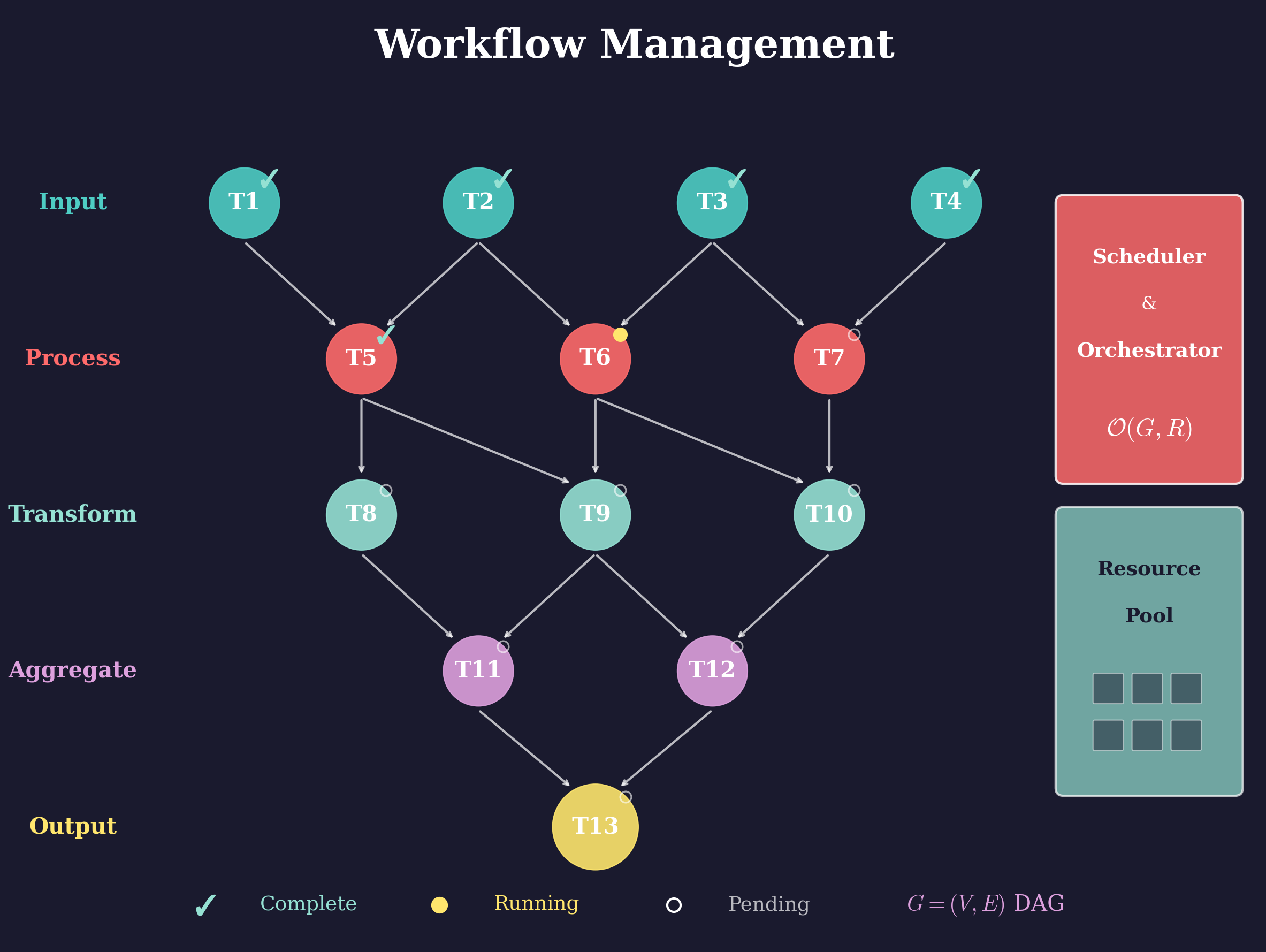
Scientific workflows orchestrate complex computational pipelines across distributed infrastructure, but failures and anomalies can waste millions of compute hours. My research develops AI-driven methods to monitor, detect, and respond to anomalies in real-time.
11 publications
Scientific Machine Learning
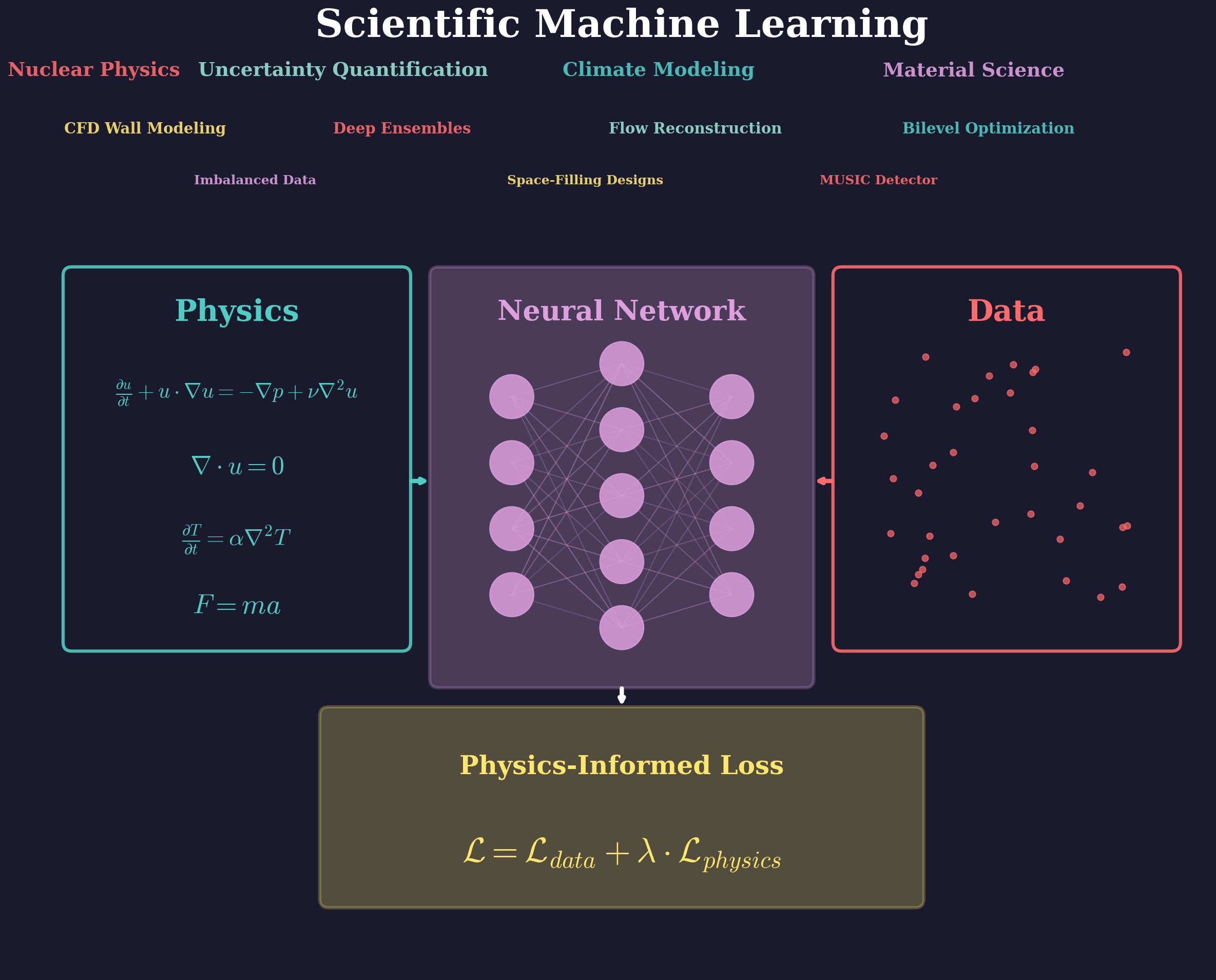
Scientific machine learning bridges physics-based modeling with data-driven methods, enabling accurate predictions with quantified uncertainties for complex physical systems.
9 publications
Deep Learning Theory & Methods
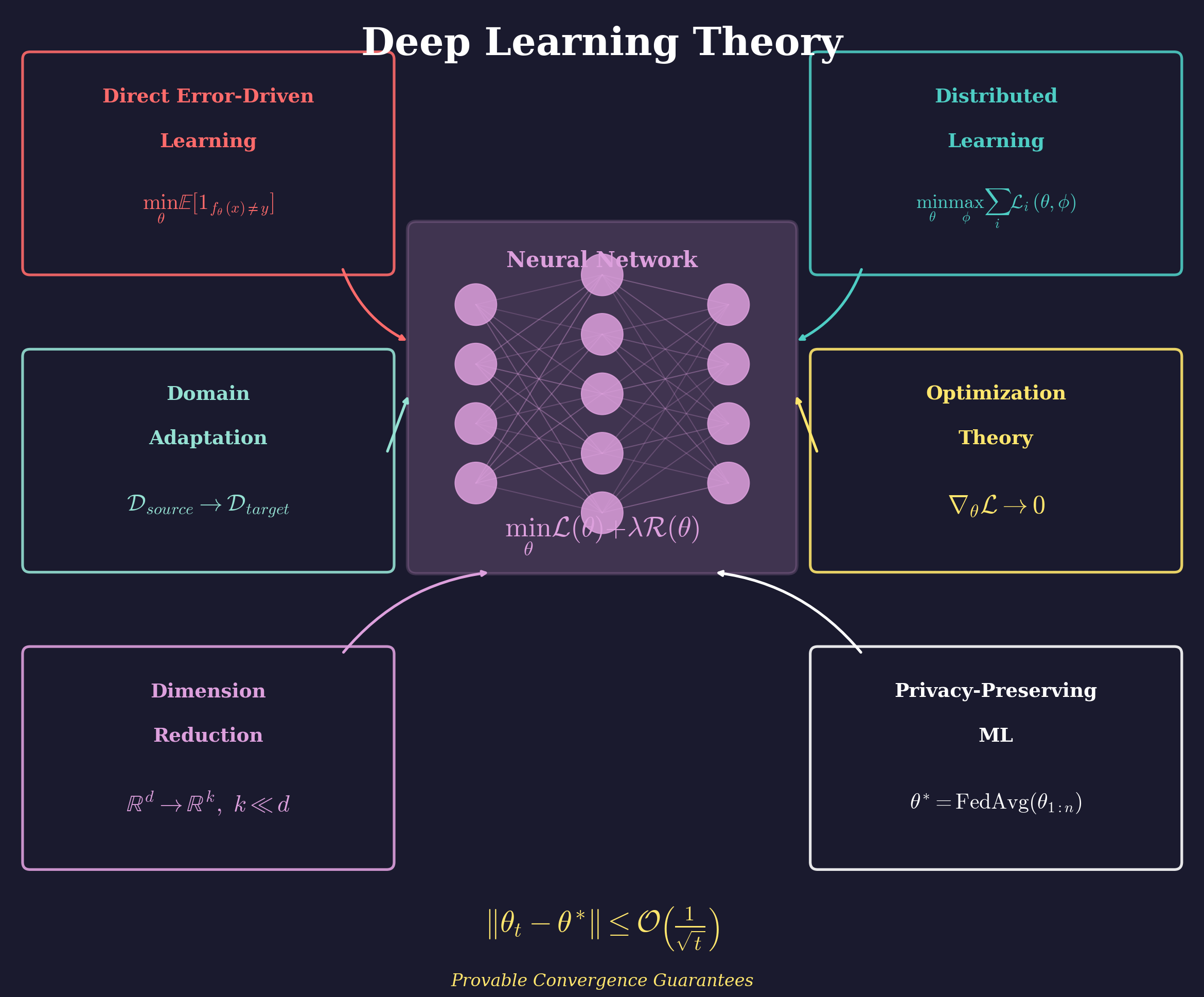
My research in deep learning foundations develops training algorithms with provable convergence guarantees, distributed learning methods for large-scale systems, and techniques for handling challenging data scenarios.
8 publications
Reinforcement Learning & Control
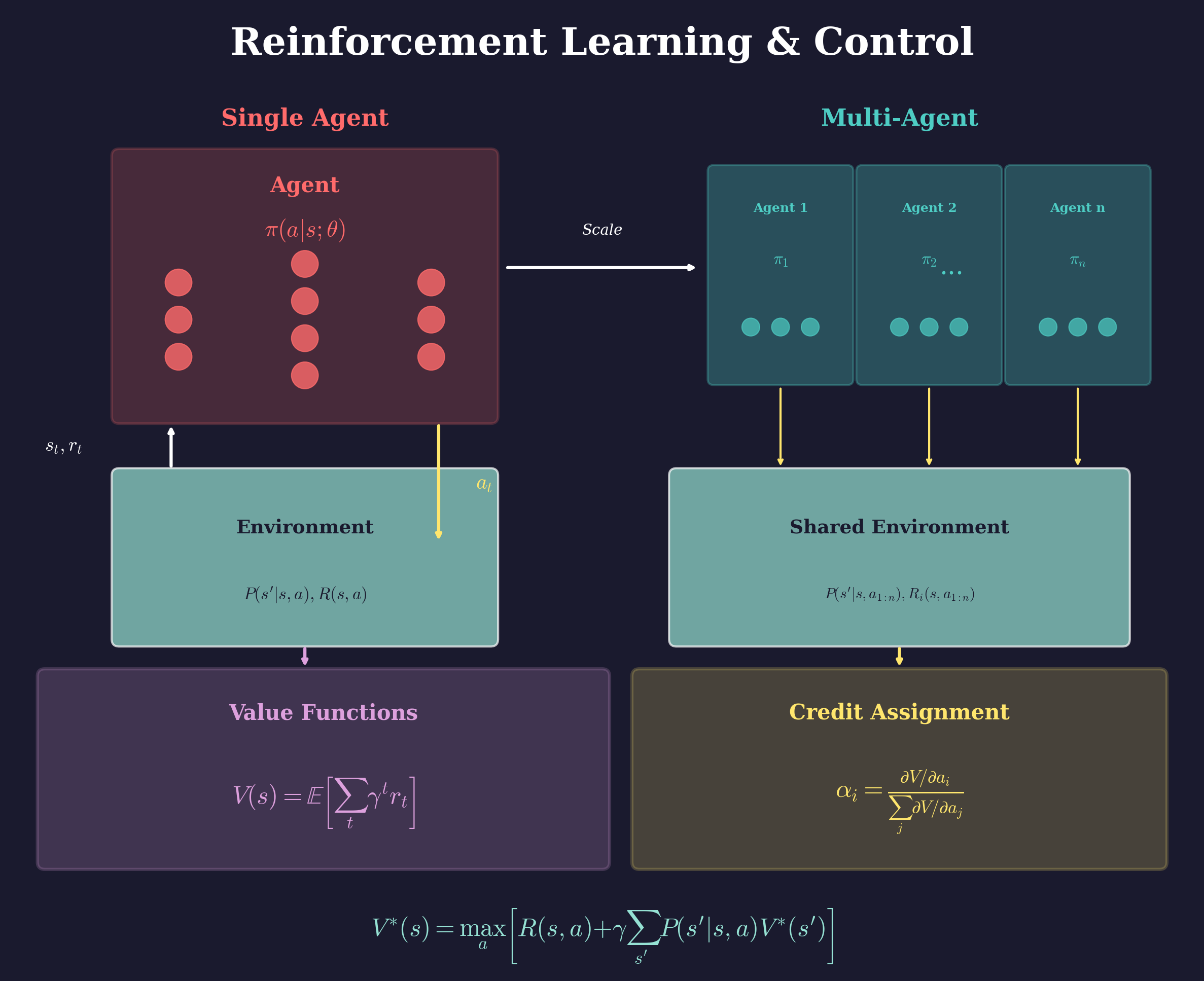
Reinforcement learning enables autonomous decision-making in complex, uncertain environments. My research spans theoretical foundations, algorithmic development, and applications to scientific and societal systems.
6 publications
Multi-Agent Reinforcement Learning
Modern AI systems are increasingly networks of agents that must coordinate with no central controller, seeing one another only through delayed, local messages. My work studies stable learning under partial observability: how each agent can keep adapting without the team spiralling or collapsing when information about a changing target arrives later the farther it must travel (the information-arrival wall). This includes an open, decentralized test-bench — coadapt-marl — for comparing policy-gradient, trust-region, and recurrent belief methods against the best achievable coordination.
3 publications